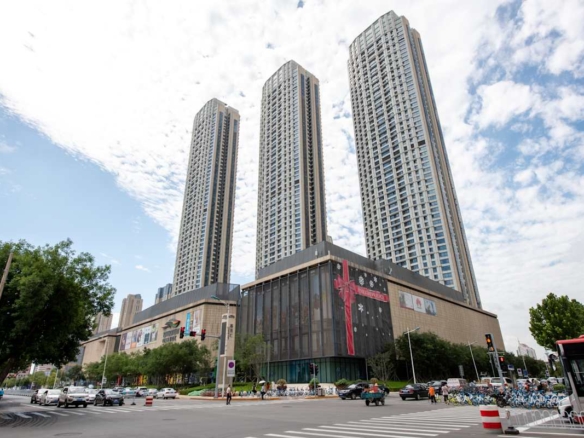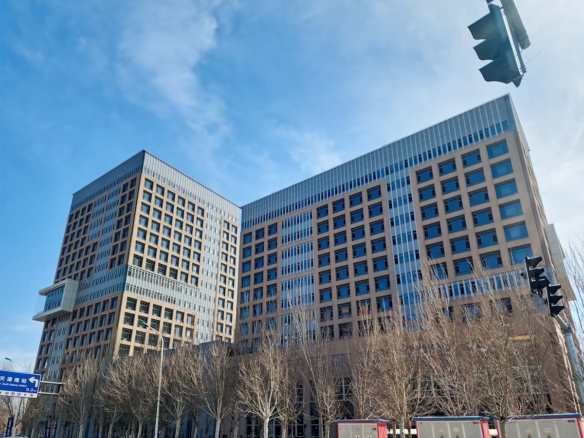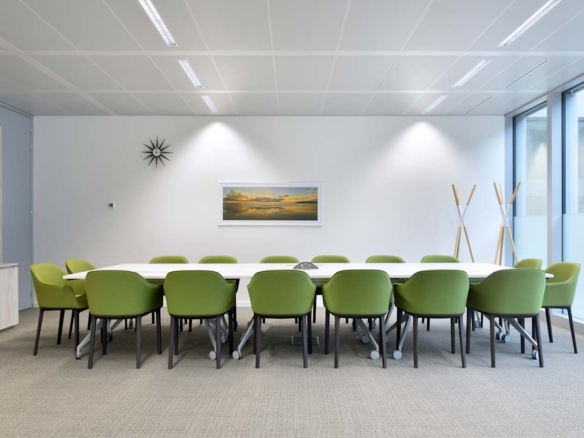
Office space in Tianjin

Tianjin’s office market spans Heping District’s traditional financial core through Binhai New Area’s modern development zones, supported by the world’s one of busiest ports and extensive rail connections serving the Beijing-Tianjin-Hebei region. The workspace landscape reflects the city’s role as a critical economic gateway anchored by advanced manufacturing, logistics, finance, and technology sectors.
Featured

Office spaces in Tianjin

A selection of the best workspaces in Tianjin
Featured

Office spaces in Tianjin

A selection of the best workspaces in Tianjin

Trusted by leading companies

Looking for workspace in Tianjin?

Our advisory team searches the full market on your behalf. Cost-free service for flexible workspace searches. Shortlist within 24 hours.

market overview

China's northern trade and industrial anchor

Tianjin ranks among China’s largest cities and serves as a critical economic gateway for the Beijing-Tianjin-Hebei region. The city’s economy centres on advanced manufacturing, automotive production, aerospace, and port-related industries, with one of the world’s busiest ports connecting northern China to global trade routes. Multinational corporations in aerospace, automotive, and petrochemicals maintain substantial operations, supported by proximity to Beijing via high-speed rail completing the journey in under 30 minutes.

Office space distributes across several key districts serving different market segments. Heping District houses the traditional financial and commercial core with established Grade A towers hosting corporate headquarters. Binhai New Area has emerged as the primary business district, attracting multinational corporations and financial institutions seeking modern workspace. Hexi District offers a mix of contemporary office buildings and business services, while Nankai District benefits from proximity to Tianjin University and research operations.

The city’s transport infrastructure strengthens its position as a critical regional hub. Rail connections link Tianjin to Beijing and beyond, whilst the port generates sustained logistics demand. This combination, paired with a skilled workforce fed by university partnerships and connections to key manufacturing supply chains, establishes Tianjin as the strategic location for companies operating across northern China’s industrial and commercial landscape.

Key Industries

What type of companies are based in Tianjin?

Manufacturing

Logistics and Supply Chain

Petrochemicals

Automotive

Aerospace

Financial Services

Your questions answered

Common questions

Heping District around the former foreign concessions and Binjiang Dao holds premium financial and professional services tenants in a mix of heritage and modern stock. Hexi around Youyi Road is the main modern CBD, with Tianjin World Financial Center, Tianjin Tower and the Juilliard Performing Arts Centre complex hosting banking and consulting firms. Nankai near the universities attracts technology and research-linked tenants. Binhai New Area, including the Yujiapu Financial District and the TEDA economic zone, is the flagship growth cluster, targeting finance, shipping, logistics and advanced manufacturing. Hedong and Hebei serve older industrial and legacy corporate tenants. The area around Tianjin Railway Station supports Beijing commuter corporates.
Tianjin is one of China’s four direct-administered municipalities and a major port, manufacturing and aviation hub alongside its role as Beijing’s saltwater gateway. The economy spans petrochemicals, automotive including Toyota and Volkswagen joint ventures, aerospace through the Airbus A320 final assembly line, and finance through the Yujiapu district ambition. Flex supply is smaller than Beijing, Shanghai or Shenzhen, with Regus, Ucommune and Distrii active alongside local operators. Demand leans corporate rather than startup-led, and much of the Yujiapu financial district pipeline has been slow to fill, leaving significant availability at competitive pricing compared to other Tier B and A Chinese cities.
The Beijing-Tianjin intercity high-speed rail connects the two cities in around 30 minutes, and many multinationals use Tianjin office space as a cost-effective complement or alternative to Beijing for back-office, R&D and manufacturing-linked operations. Occupiers commonly base senior executives in Beijing and operational teams in Tianjin, shuttling as needed. Buildings near Tianjin Railway Station and Tianjin West Station attract this commuter-focused demand, and flex operators in these locations serve teams that visit Beijing multiple times a week. The Beijing-Tianjin-Hebei integration policy continues to support coordinated economic planning between the three regions.
Tianjin’s flexible workspace market is overwhelmingly serviced office in format, with supply concentrated across the Heping CBD, the Binhai New Area, the Tianjin Economic-Technological Development Area (TEDA) and the Yujiapu Financial District. Global, national and boutique operators serve banking, manufacturing HQs, logistics and multinational regional teams. Dedicated coworking and managed office formats are not currently a significant part of the Tianjin market, reflecting tenant preference for traditional serviced suites. Occupiers seeking informal coworking-style environments often use shared lounges and amenity floors within serviced office buildings.
Flexible workspace demand in Tianjin is anchored by manufacturing and logistics, given Tianjin’s role as a major industrial port serving Beijing and northern China. Automotive engineering, anchored by FAW Toyota, FAW Volkswagen and a deep supplier network, drives substantial demand at TEDA. Aerospace, with Airbus’s A320 final assembly line in Tianjin, is unusually deep. Banking and financial services occupiers cluster across the Heping CBD and the Yujiapu Financial District. Petrochemicals tied to the Bohai Bay oilfields, shipping and logistics tied to the Port of Tianjin, biotech and pharmaceuticals, and a growing technology base round out demand.