Office space in Istanbul

Istanbul operates as Turkey’s dominant office market with established financial corridors on the European side and emerging alternatives across the Bosphorus. The market supports multinational regional headquarters and a growing local startup ecosystem.
Featured

Office spaces in Istanbul

A selection of the best workspaces in Istanbul
Featured

Office spaces in Istanbul

A selection of the best workspaces in Istanbul

Trusted by leading companies

Looking for workspace in Istanbul?

Our advisory team searches the full market on your behalf. Cost-free service for flexible workspace searches. Shortlist within 24 hours.

market overview

Turkey's transcontinental financial centre

Istanbul functions as Turkey’s economic engine and a transcontinental gateway between Europe and Asia, generating over 30 percent of national GDP. The city hosts headquarters for most major Turkish corporations alongside regional offices of international firms. Finance, manufacturing, technology, and logistics drive the economy, supported by a workforce exceeding 10 million and substantial university output.

Office space concentrates across distinct districts with different occupier profiles. Levent and Maslak form the primary financial corridor, where corporate towers house banks, consultancies, and multinational headquarters. These areas command premium rents reflecting institutional concentration. Atasehir on the Asian side has emerged as a modern alternative business district, offering newer stock and competitive positioning. Sisli and Mecidiyekoy provide mixed-use environments attracting media, advertising, and professional services firms seeking central locations with transport connectivity.

Compared to Ankara, Istanbul offers greater multinational presence and higher rents; versus Moscow, it provides stronger Middle Eastern and Asian market access. The city’s position spanning two continents creates natural advantages for companies serving both European and Asian markets. Direct flights to major financial centres support international business operations. The Asian side development offers expansion capacity as the European core reaches saturation, providing longer-term growth options for occupiers requiring headquarters or substantial team bases in the region.

Key Industries

What type of companies are based in Istanbul?

Manufacturing

Financial Services

Tourism and Hospitality

Logistics and Supply Chain

Textiles

Construction

Your questions answered

Common questions

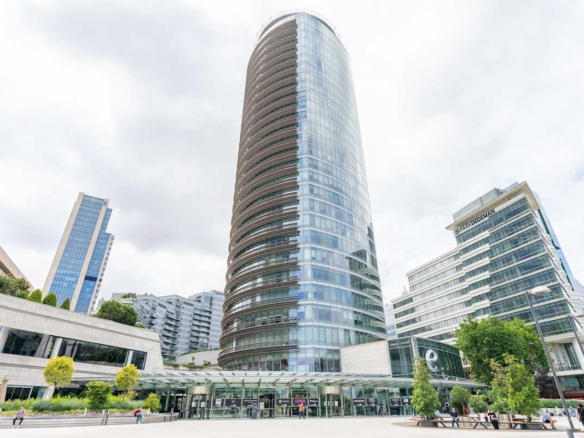
Levent and Maslak on the European side form the main CBD, with Istanbul Sapphire, Zorlu Center and the Metrocity complex housing banking, consulting and multinational tenants. Sisli and Mecidiyekoy suit mid-market professional services and media occupiers. Kagithane has emerged as a growing, cheaper alternative for scaling tech and creative teams. Umraniye and Atasehir on the Anatolian side host the Istanbul Financial Center and draw banking, fintech and insurance tenants. Kadikoy appeals to design studios, startups and founders. Besiktas and Etiler hold boutique law firms and family offices, while Taksim and Galata suit creative agencies and media.
Istanbul is Turkey’s commercial capital and one of the largest regional hubs linking Europe, the Middle East and Central Asia. The economy spans banking, insurance, manufacturing, logistics, construction and a growing software and gaming industry anchored by firms such as Peak Games and Dream Games. The Istanbul Financial Center in Atasehir is drawing banking headquarters across to the Anatolian side. Flex supply includes Regus, Workhaus, Kolektif House and Impact Hub, with demand weighted to managed and private office solutions given sensitivity around lira volatility and the preference for fixed-term, well-managed occupational costs.
Istanbul’s workforce is split across European and Anatolian sides, and bridge traffic is unpredictable, particularly at peak times on the July 15 Martyrs Bridge and Fatih Sultan Mehmet Bridge. Marmaray and the M2 and M5 metro lines now offer more reliable cross-strait options, and occupiers often choose buildings close to stations such as Levent, Gayrettepe, Maslak, Atasehir and Kozyatagi. Companies with staff distributed across both sides sometimes run dual flex footprints, one on each side, to reduce commute burden. New Istanbul Airport in Arnavutkoy has shifted some large corporate interest northwards along the Northern Marmara Motorway.
Istanbul’s flexible workspace market is overwhelmingly serviced office in format, with supply concentrated across Levent, Maslak, Sisli and Etiler on the European side, alongside the Atasehir Financial Center on the Asian side. Global, national and boutique operators serve banking, professional services, manufacturing HQs and multinational regional teams covering the Middle East, the Balkans and Central Asia. Dedicated coworking and managed office formats are not currently a significant part of Istanbul’s market, reflecting tenant preference for traditional serviced suites. Occupiers seeking informal coworking-style environments often use shared lounges and amenity floors within serviced office buildings.
Flexible workspace demand in Istanbul is anchored by Istanbul’s role as Turkey’s commercial capital and a regional gateway to the Middle East, Central Asia and the Balkans. Banking and financial services anchor Levent and Maslak, with Garanti BBVA, Akbank, Isbank and a deep cluster of investment banks and asset managers. Manufacturing HQs across automotive, white goods, textiles and construction maintain large supplier networks. Logistics, shipping and trading firms tied to the Bosphorus drive substantial demand. Technology and gaming are growing rapidly, anchored by Peak Games, Dream Games and a strong venture-backed startup community. Tourism and hospitality services round out demand.