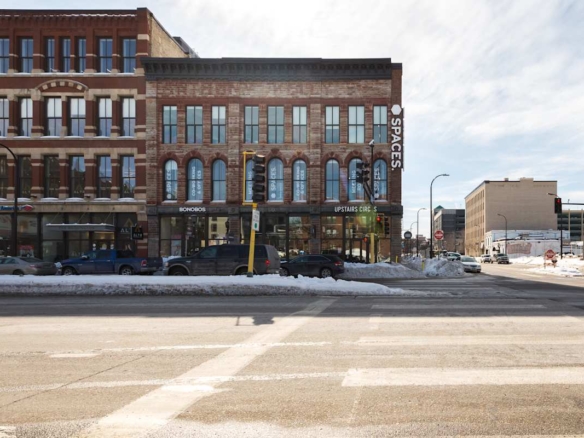
Serviced offices in Minneapolis

Serviced offices in Minneapolis sit in the skyway blocks around Nicollet Mall, Marquette Avenue and Second Avenue South, with the North Loop’s converted warehouses carrying the creative, technology and agency end of the market. Banking, insurance, medtech, retail and agribusiness headquarters and the law, accounting and consulting firms serving them drive demand. Flexify lists serviced offices across downtown Minneapolis and the western suburbs.
Featured

Serviced offices in Minneapolis

A selection of the best serviced offices in Minneapolis
Featured

Serviced offices in Minneapolis

A selection of the best serviced offices in Minneapolis

Trusted by leading companies

Looking for serviced offices in Minneapolis?

Our advisory team searches the full market on your behalf. Cost-free service for flexible workspace searches. Shortlist within 24 hours.

market overview

Skyway-connected serviced offices in the Upper Midwest's corporate capital

Minneapolis-Saint Paul hosts one of the largest groupings of Fortune 500 headquarters in the country, spanning financial services, medical technology, retail, agribusiness and healthcare, and the law, accounting, consulting and marketing firms serving them keep a constant call on small suites downtown. The University of Minnesota and a large teaching hospital sector hold a research and clinical workforce close to the centre, and a strong advertising and creative community has settled in the North Loop.

Downtown around Nicollet Mall and the IDS Center is the core for banking, legal and headquarters tenants, and the North Loop is the main creative, technology and agency district in converted warehouse stock with a deep founder community. Uptown and the lakes attract boutique professional services and healthcare tenants, the West End in St Louis Park and Wayzata serve corporate and financial services occupiers preferring suburban campuses, and the university area supports life sciences and research-linked tenants.

The Skyway shapes building choice more than in any other American city. Occupiers heavily favour skyway-connected buildings, which allow staff to move between office, lunch and amenities without exposure to the winter, and stock even a block off the network can trade at a discount, while the North Loop has built its own pull through amenity density and a walkable grid. Demand has skewed to private suites and managed offices, taken on monthly or 12-month terms with rent, furniture, reception and utilities on a single fee.

Key Industries

What type of companies are based in Minneapolis?

Healthcare

Financial Services

Retail

Manufacturing

Professional Services

Technology

Workspace types

Other types of workspaces in Minneapolis

Office space

Browse the full range of private offices, managed suites and coworking products across every country and price point.

Coworking spaces

Flexible shared workspace offering hot desks, dedicated desks and private pods on rolling terms. High-speed internet, breakout areas and bookable meeting rooms included. A cost-effective option for freelancers, remote workers and small teams.

Managed offices

Dedicated, self-contained workspace designed to your specifications. The privacy and branding of a traditional lease with the flexibility of a serviced model. Best for growing teams that need a tailored environment without managing the space themselves.

Your questions answered

Common questions

Downtown Minneapolis around the Nicollet Mall corridor and IDS Center is the core for banking, legal and Fortune 500 headquarters tenants including US Bank, Ameriprise and Target. The North Loop is the main creative, tech and agency cluster in converted warehouse stock, home to Target’s digital teams and a deep founder community. Uptown and the Lake Calhoun area attract boutique professional services and healthcare tenants. The West End in St Louis Park and Wayzata serve corporate and financial services occupiers preferring suburban campuses. The University of Minnesota area supports life sciences and research-linked tenants including Medtronic’s ecosystem.
Minneapolis-Saint Paul hosts one of the densest concentrations of Fortune 500 headquarters in the US, with Target, US Bancorp, 3M, UnitedHealth, Best Buy and Medtronic anchoring a diverse corporate base. The economy spans financial services, medtech, agribusiness, retail and a strong advertising and creative cluster in the North Loop. Flex supply includes WeWork, Industrious, Fueled Collective, CoCo and Regus across downtown and the North Loop. Demand has skewed to private suites and managed offices, with hybrid working driving sustained interest in well-connected, amenity-rich buildings rather than large fixed-lease commitments.
The Minneapolis Skyway is the largest continuous skyway system in the world, spanning around 80 city blocks and connecting offices, hotels, retail and parking in climate-controlled walkways. Occupiers downtown heavily favour Skyway-connected buildings because they allow staff to move between office, lunch and amenities without exposure to harsh winters. Non-Skyway buildings, even a block off the network, can trade at a discount and struggle to attract hybrid workers during December to February. North Loop buildings, while not on the Skyway, have built their own pull through amenity density and the walkable grid between Washington and Hennepin avenues.
Minneapolis offers a substantial flexible workspace market dominated by serviced offices, with supply concentrated across the Downtown Minneapolis CBD, the North Loop, Uptown and the wider St. Paul corridor. Operators range from global brands to boutique providers serving Fortune 500 corporate HQs, financial services and a strong healthcare and medtech base. Coworking is more limited but present, with operators across the North Loop and Uptown, supporting founders, scale-ups and creative agencies. Managed offices, where space is fitted bespoke for a single tenant on a flex contract, are not yet a meaningful part of the Minneapolis market.
Flexible workspace demand in Minneapolis is shaped by an exceptionally broad Fortune 500 base. Major HQ presences include Target, US Bancorp, Best Buy, 3M, General Mills, UnitedHealth Group, Ameriprise Financial and Cargill, driving substantial supplier and consulting demand. Healthcare and medtech are unusually deep, with the Mayo Clinic in nearby Rochester, Medtronic and a strong med-device cluster. Financial services anchor the Downtown CBD. Agribusiness, food and beverage, professional services, law firms and a growing tech, fintech and healthcare IT base round out demand.