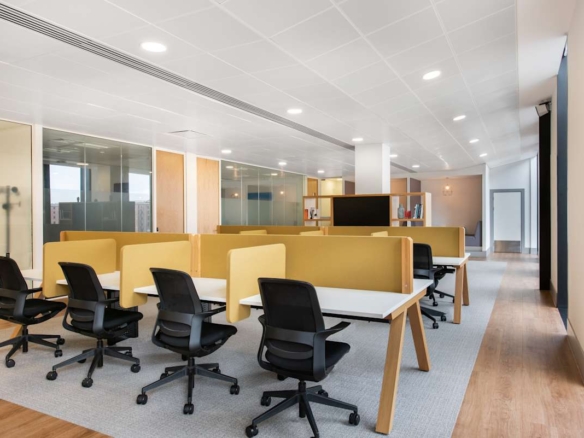
Office space in Liverpool

Liverpool’s flexible workspace market has matured rapidly, driven by sustained regeneration across the city centre, waterfront, and Baltic Triangle. From Grade A towers on the commercial core to converted warehouses in the creative quarter, the city now offers genuine depth across price points and workspace formats.
Featured

Office spaces in Liverpool

A selection of the best workspaces in Liverpool

No listing found.

Featured

Office spaces in Liverpool

A selection of the best workspaces in Liverpool

Trusted by leading companies

Looking for workspace in Liverpool?

Our advisory team searches the full market on your behalf. Cost-free service for flexible workspace searches. Shortlist within 24 hours.

market overview

A city built on trade, reinvention, and resilience

Liverpool is one of the UK’s most commercially diverse regional cities, with an economy anchored by financial services, digital technology, life sciences, and a creative sector that punches well above its weight. The city supports over 40,000 businesses and benefits from direct global trade links through the Port of Liverpool, one of the UK’s largest.

The city centre has been transformed by sustained public and private investment. The Commercial District around Old Hall Street and Exchange Flags houses major employers in insurance, law, and professional services. The Baltic Triangle has emerged as one of the UK’s most recognised creative and digital quarters, attracting agency founders, tech startups, and media companies to converted warehouse stock. The Knowledge Quarter, anchored by the University of Liverpool, Liverpool John Moores University, and the Royal Liverpool University Hospital, is developing into a significant cluster for health innovation and research commercialisation.

For businesses evaluating Liverpool against Manchester or Leeds, the proposition is clear: materially lower office costs, a labour market strengthened by three universities and improving graduate retention, direct rail to London in just over two hours, and a quality of life that consistently ranks among the highest in the UK. The city’s cultural infrastructure, from Tate Liverpool to its UNESCO-listed waterfront, supports recruitment and client engagement in ways that purely commercial centres cannot match.

Key Industries

What type of companies are based in Liverpool?

Logistics and Supply Chain

Maritime Services

Life Sciences

Tourism and Hospitality

Education

Creative Industries

Workspace types

Workspace types in Liverpool

Serviced offices

Fully fitted, all-inclusive, move-in ready. Furniture, IT, reception, and cleaning in a single monthly fee. Terms from one month.

Coworking spaces

Flexible shared workspace offering hot desks, dedicated desks and private pods on rolling terms. High-speed internet, breakout areas and bookable meeting rooms included. A cost-effective option for freelancers, remote workers and small teams.

Your questions answered

Common questions

The commercial district around Old Hall Street and Princes Dock is the core for banking, insurance and professional services, with stock including No.1 Old Hall Street and the Plaza. The Baltic Triangle is the leading creative and digital cluster, anchored by Baltic Creative and Studio Schools with gaming, design and tech occupiers. The Royal Albert Dock and Liverpool Waterfront suit heritage conversions used by agencies and cultural organisations. Knowledge Quarter around Mount Pleasant and the new Paddington Village houses life sciences and university-linked spinouts. The Ropewalks blends smaller founders and creative businesses in converted warehouse stock.
Liverpool’s economy has rebalanced toward life sciences, creative industries, advanced manufacturing and digital services, with the Knowledge Quarter and Paddington Village anchoring biomedical investment around the Royal Liverpool University Hospital. The commercial district retains major insurance and professional services tenants. Flex supply is mid-sized but growing, with operators including Avenue HQ, Bruntwood, Regus and The Cotton Exchange providing a mix of grade A serviced offices and warehouse-style creative space. Rents are materially below Manchester and Leeds, which has attracted satellite offices from London firms. The occupier mix is noticeably more creative and SME-weighted than Manchester.
The Liverpool City Region Combined Authority has delivered targeted support for creative industries, life sciences and freeport designated zones, including the Liverpool Freeport covering parts of the docks and Wirral Waters. Occupiers in qualifying sectors can access grants, business rates relief and simplified customs procedures within freeport tax sites. The Mayoral Investment Zone status for Liverpool also offers enhanced capital allowances and stamp duty relief on qualifying premises. Tenants exploring life sciences space at Paddington Village or advanced manufacturing at Wirral Waters often factor these incentives into site selection, which can tip the decision toward specific buildings within freeport boundaries.
Liverpool offers a complete flexible workspace stack across the city. Serviced offices anchor supply across the central business district around Old Hall Street and the commercial district, the Royal Albert Dock, the Knowledge Quarter at Liverpool’s Innovation Park and the Baltic Triangle. Coworking is well represented, particularly across the Baltic Triangle, the Ropewalks and the Knowledge Quarter, supporting founders, creative agencies, gaming studios and tech scale-ups. Managed offices, where space is fitted bespoke for a single tenant on a flex contract, are also offered across Class A buildings such as the Plaza Building and Princes Dock for occupiers wanting a tailored environment without a conventional lease.
Flexible workspace demand in Liverpool is anchored by life sciences, with the Knowledge Quarter and Liverpool Bio-Innovation Hub hosting AstraZeneca, Unilever, Liverpool School of Tropical Medicine and a deep biotech and infectious disease research cluster. Maritime and logistics, given the Port of Liverpool’s role as the UK’s busiest west coast port and the Liverpool 2 deep-water terminal, drive substantial demand. Music, sport and creative industries are unusually strong, anchored by the Liverpool Football Club commercial machine, the city’s UNESCO music heritage and a vibrant gaming community. Public sector, professional services and a growing tech scale-up community round out demand.