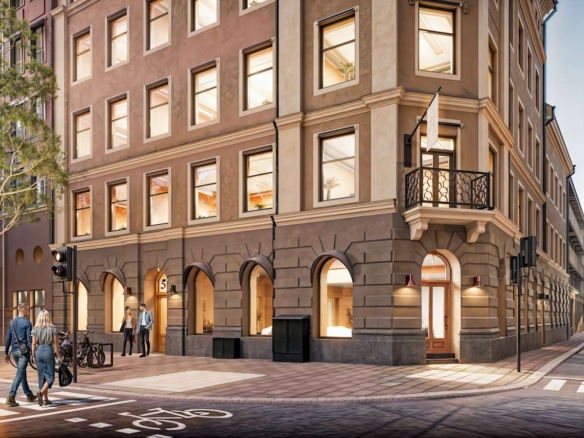
Office space in Stockholm

Stockholm operates as Scandinavia’s largest business centre and a leading European technology hub with established financial and tech districts. Kista functions as Sweden’s primary technology cluster, whilst central locations in Norrmalm and Östermalm serve corporate and professional occupiers.
Featured

Office spaces in Stockholm

A selection of the best workspaces in Stockholm

No listing found.

Featured

Office spaces in Stockholm

A selection of the best workspaces in Stockholm

Trusted by leading companies

Looking for workspace in Stockholm?

Our advisory team searches the full market on your behalf. Cost-free service for flexible workspace searches. Shortlist within 24 hours.

market overview

Nordic tech and fintech powerhouse

Stockholm functions as Scandinavia’s largest business centre and a leading European technology hub, anchored by digital innovation, life sciences, fintech, and clean technology. The city’s economy is supported by a highly educated workforce, strong international connectivity, and a mature venture capital ecosystem. Major employers including Spotify, Klarna, and Ericsson operate alongside a dense network of scale-ups and venture-backed companies, reflecting Stockholm’s position as a global technology innovation centre.

Office space concentrates across distinct districts serving specialized markets. The Central Business District spanning Norrmalm and Östermalm houses financial services, legal firms, and corporate headquarters in premium Grade A buildings commanding premium rents. Kista, north of the city, functions as Sweden’s primary technology cluster, home to major data centres and a dense network of software and hardware companies built around Ericsson’s presence. Södermalm attracts creative industries and startups with converted industrial spaces. Kungsholmen has emerged as a creative and tech-focused quarter, whilst newer development zones in Hammarby Sjöstad and Hagastaden provide modern infrastructure and sustainability credentials.

Stockholm’s serviced office market is mature and competitive, dominated by international operators alongside local providers. The city competes effectively against other European technology centres through its digital maturity, talent availability, and tax efficiency. Copenhagen and Oslo serve as nearby regional alternatives, though Stockholm’s scale and venture capital depth provide competitive advantage. Arlanda airport provides connectivity to London and continental Europe, with excellent public transport supporting business travel within the Nordic region.

Key Industries

What type of companies are based in Stockholm?

Technology

Financial Services

Life Sciences

Gaming

Manufacturing

Professional Services

Workspace types

Workspace types in Stockholm

Serviced offices

Fully fitted, all-inclusive, move-in ready. Furniture, IT, reception, and cleaning in a single monthly fee. Terms from one month.

Coworking spaces

Flexible shared workspace offering hot desks, dedicated desks and private pods on rolling terms. High-speed internet, breakout areas and bookable meeting rooms included. A cost-effective option for freelancers, remote workers and small teams.

Your questions answered

Common questions

City around Norrmalmstorg, Kungsholmen and Stureplan holds the prime banking, legal and professional services stock, with SEB, Mannheimer Swartling and Handelsbanken among the largest occupiers. Hammarby Sjostad and Sodermalm attract creative, media and scaling tech firms, including King’s headquarters and many scaleups. Kista on the northern edge is Northern Europe’s largest ICT cluster, home to Ericsson, Tele2 and supporting tech occupiers. Solna and the Arenastaden district host AstraZeneca, Skanska and multinational pharma and construction firms. Ostermalm houses private banking, asset management and family offices. Vasastan suits boutique professional services in heritage stock.
Stockholm is Sweden’s financial, political and technology capital, with one of Europe’s densest concentrations of unicorns per capita including Spotify, Klarna, King and iZettle, alongside traditional banking, engineering and pharmaceutical corporates. The occupier mix blends conservative Swedish corporates with a deep scaleup and VC-backed pool. Flex supply is led by Convendum, United Spaces, Regus, Mindpark, Epicenter and SUP46, concentrated in the City and Sodermalm. Demand is weighted to well-designed, design-led private suites and managed offices, with strong expectations around amenity, sustainability certifications and wellbeing provisions such as showers, bike storage and quality food service.
Swedish corporate tenants routinely expect BREEAM or LEED certification alongside Miljobyggnad Guld for new leases, and many public sector tenants mandate these as a minimum. This concentrates demand on newer stock in Hammarby Sjostad, Arenastaden and the City’s regenerated blocks around Sergels Torg, and rules out older buildings without significant retrofit. The Stockholm municipality’s climate targets for the city to be fossil-fuel free by 2040 reinforce this, with building performance expectations tightening each year. Flex operators in top-rated buildings use these certifications as a key differentiator for ESG-focused enterprise tenants, and certified space commands a measurable rental premium.
Stockholm offers a sophisticated flexible workspace market dominated by serviced offices, with supply concentrated across Norrmalm, Ostermalm, the Stureplan corridor, Kista Science City and the Hammarby Sjostad waterfront. Operators range from global brands to long-established Nordic platforms, supporting banking, technology and a deep scale-up community. Coworking is well represented, particularly across Sodermalm, Stureplan and the SoFo creative belt, supporting founders, design studios and gaming firms. Managed offices, where space is fitted bespoke for a single tenant on a flex contract, are not yet a meaningful part of the Stockholm market.
Flexible workspace demand in Stockholm is overwhelmingly anchored by technology, with Spotify, Klarna, EQT, King, iZettle’s legacy at PayPal and a deep cluster of unicorns and venture-backed startups driving substantial activity. Banking and financial services occupiers, including SEB, Handelsbanken, Swedbank, Nordea and a strong asset management community, cluster across Norrmalm. Telecoms, anchored by Ericsson and a deep network equipment ecosystem, drive demand at Kista. Industrial HQs (Atlas Copco, Sandvik, ABB-linked operations), gaming, fintech, cleantech and a substantial fashion, design and music industries base round out demand.