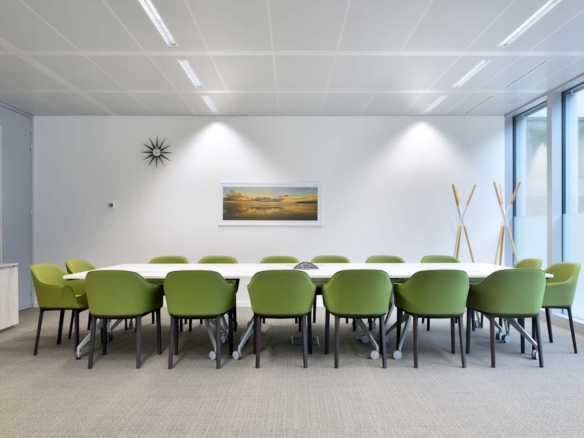
Office space in Seoul

Seoul’s flexible workspace market serves one of Asia’s most advanced economies, with centres concentrated in Gangnam, the CBD around City Hall, and the Yeouido financial district. The city’s combination of global technology conglomerates, a fast-growing startup ecosystem, and some of the world’s best digital infrastructure creates consistent demand for workspace on flexible terms.
Featured

Office spaces in Seoul

A selection of the best workspaces in Seoul

No listing found.

No listing found.

Featured

Office spaces in Seoul

A selection of the best workspaces in Seoul

Trusted by leading companies

Looking for workspace in Seoul?

Our advisory team searches the full market on your behalf. Cost-free service for flexible workspace searches. Shortlist within 24 hours.

market overview

The technology powerhouse of Northeast Asia

Seoul is the capital of South Korea and the economic centre of one of the world’s most technologically advanced economies. The city’s GDP ranks among the highest of any metropolitan area globally, driven by technology, electronics, automotive, shipbuilding, and financial services. Samsung, LG, Hyundai, SK Group, and the Korean operations of major multinational corporations are headquartered in or around Seoul. The Korean government’s sustained investment in innovation and digital infrastructure has also produced one of Asia’s most active startup ecosystems, particularly in fintech, e-commerce, gaming, and artificial intelligence.

The CBD around City Hall and Gwanghwamun houses government institutions and traditional corporate occupiers, including banking and insurance. Gangnam, south of the Han River, has become Seoul’s most commercially prominent district, attracting technology firms, venture capital, and professional services. Yeouido is the financial centre, home to the Korea Exchange and the headquarters of major securities firms and asset managers. Pangyo Techno Valley, in the satellite city of Seongnam, functions as South Korea’s answer to Silicon Valley, housing the offices of Kakao, NHN, Nexon, and a growing number of AI and biotech firms.

Seoul’s transport network is extensive and efficient. The Seoul Metro carries over 7 million passengers daily across more than 20 lines, and the KTX high-speed rail connects the city to Busan in under two and a half hours. Incheon International Airport, consistently ranked among the world’s best, provides direct flights to over 180 destinations.

Seoul National University, KAIST, Yonsei, and Korea University produce graduates in engineering, computer science, and business who enter one of Asia’s most competitive labour markets. For companies considering Seoul as an Asia-Pacific base, the advantages are the depth of the technology and manufacturing ecosystem, world-class digital infrastructure, and a flexible workspace market that accommodates both multinational regional offices and early-stage companies.

Key Industries

What type of companies are based in Seoul?

Technology

Financial Services

Manufacturing

Media

Real Estate

Professional Services

Your questions answered

Common questions

Gangnam, particularly around Teheran-ro, is the city’s primary flex cluster, suiting tech, startups, venture capital and professional services, with deep subway access. Yeouido anchors banking, asset management and broadcasting, and suits financial services occupiers. Jung-gu and Gwanghwamun in the historic CBD host large Korean corporates, legal firms and government-facing advisory businesses. Seongsu-dong has emerged as a creative, design and lifestyle brand district. Pangyo, just south of the city proper, operates as Korea’s main tech campus hub and hosts gaming, platform and IT occupiers seeking larger floorplates.
Seoul has a well-developed flex market dominated by domestic operators alongside major international brands, with deep supply in Gangnam and steady growth in Yeouido, Jung-gu and Pangyo. Occupier demand is broad, covering Korean chaebol project teams, venture-backed tech and gaming firms, foreign companies entering the Korean market, and professional services. The market skews toward private offices and branded team suites rather than heavy hot-desk use, and Korean language service, local corporate registration support and strong IT infrastructure are standard features across the better buildings.
International teams use Seoul coworking spaces widely, particularly in Gangnam and Jung-gu where English-speaking staff and bilingual signage are standard in the major operators. Short-term day passes and monthly memberships are readily available without full company registration in Korea, making the city straightforward for visiting teams, regional travellers and remote workers on tourist or business visas. Longer-term corporate occupiers typically require a local entity or branch registration, which several operators can support through partner firms. Connectivity is excellent nationwide, with fast fibre and mobile coverage as standard.
Seoul offers a deep flexible workspace market with strong supply across both serviced offices and coworking. Serviced offices anchor the market in the Gangnam Business District, the CBD around City Hall and Jongno, Yeouido’s financial centre and the Seongsu and Pangyo innovation belts, serving conglomerates, multinational regional teams and law firms. Coworking is unusually well developed for an East Asian market, with operators across Gangnam, Hongdae and Seongsu supporting scale-ups, gaming studios, K-content firms and freelancers. Managed offices, where space is fitted bespoke for a single tenant on a flex contract, are not yet a meaningful part of the Seoul market.
Flexible workspace demand in Seoul is shaped by Korea’s chaebol-led corporate base, with Samsung, Hyundai, LG and SK supplier networks driving substantial activity across Gangnam, Yeouido and Pangyo. Technology, gaming and K-content occupiers cluster across Gangnam, Pangyo and Seongsu, supported by Naver, Kakao, Krafton and a vibrant venture-backed startup community. Finance and asset management anchor Yeouido and Gangnam. Beauty, fashion and consumer brands are concentrated across Gangnam and Hongdae. Professional services and law firms support the broader corporate base. Semiconductors, automotive and shipbuilding-adjacent engineering services round out the demand picture.