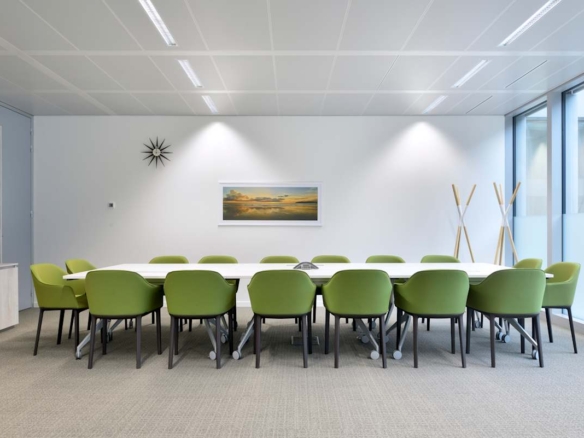
Office space in Ho Chi Minh City

Ho Chi Minh City remains Vietnam’s dominant business centre with established zones in District 1 and emerging tech hubs in District 2. The market has matured substantially, supporting multinational investment and expanding domestic startup activity.
Featured

Office spaces in Ho Chi Minh City

A selection of the best workspaces in Ho Chi Minh City

No listing found.

No listing found.

Featured

Office spaces in Ho Chi Minh City

A selection of the best workspaces in Ho Chi Minh City

Trusted by leading companies

Looking for workspace in Ho Chi Minh City?

Our advisory team searches the full market on your behalf. Cost-free service for flexible workspace searches. Shortlist within 24 hours.

market overview

Vietnam's commercial and technology gateway

Ho Chi Minh City functions as Vietnam’s largest commercial centre and primary driver of national economic growth, accounting for over a quarter of GDP. The city drives key sectors including finance, technology, manufacturing, and logistics. Foreign direct investment remains strong, particularly in technology and business services, supported by young skilled workforce and competitive operating costs that create sustained appeal for multinational operations.

Office space concentrates across established business districts with specific occupier profiles. District 1 forms the traditional central business district, home to Grade A towers housing multinational headquarters, banks, and financial institutions. District 2 and Thu Duc City have emerged as innovation and technology hubs, attracting startups and regional technology offices. District 7 offers modern mixed-use development with strong infrastructure suited to foreign-invested enterprises and multinational regional offices. Binh Thanh and Phu Nhuan provide mid-market alternatives with improving transport links at lower rents.

Compared to Bangkok, Ho Chi Minh City offers stronger technology sector growth and government support for startups; versus Manila, it provides superior infrastructure and more established multinational presence. The city’s youthful demographic supports rapid labour force growth and technology adoption. Domestic venture capital activity has expanded substantially, supporting increasingly sophisticated startup ecosystem. International connectivity via Tan Son Nhat Airport and strong regional positioning make Ho Chi Minh City natural base for companies establishing Southeast Asian operations or serving Indochina markets.

Key Industries

What type of companies are based in Ho Chi Minh City?

Manufacturing

Technology

Financial Services

Real Estate

Logistics and Supply Chain

Tourism and Hospitality

Your questions answered

Common questions

District 1 is the core CBD, with Bitexco, Saigon Centre, Deutsches Haus and Me Linh Point housing banking, legal and multinational tenants. The Thu Thiem New Urban Area across the Saigon River in District 2 is the main growth cluster, with new grade A towers such as The Hallmark attracting finance and technology occupiers. Binh Thanh and the area around Landmark 81 suit scaling tech and consumer brands. District 7 around Phu My Hung appeals to Korean, Japanese and Taiwanese firms. District 3 and Phu Nhuan hold creative agencies, smaller professional services and startup-focused flex operators such as Toong and Dreamplex.
Ho Chi Minh City is Vietnam’s commercial capital, with an economy built on manufacturing supply chains, banking, ecommerce, logistics and a rapidly scaling technology sector. Multinational tenants from Japan, Korea, Taiwan, Singapore and the US dominate premium flex demand, alongside a large pool of domestic founders and SMEs. Supply has expanded quickly, with international operators such as Regus, WeWork, JustCo and The Executive Centre alongside domestic brands Toong, Dreamplex and CirCO. Occupier demand is weighted towards managed and private office solutions, and grade A stock is concentrated in District 1 and Thu Thiem.
Saigon traffic is notoriously congested, and the metro network is still limited to Line 1 between Ben Thanh and Suoi Tien, so door-to-door commute times vary dramatically with rush hour. Occupiers often prioritise buildings within walking distance of staff residential clusters or along main arteries such as Nguyen Hue, Le Loi and Dien Bien Phu. Foreign managers based in Thao Dien typically prefer offices in District 1 or Thu Thiem. Motorbike parking capacity, secure lifts and on-site shower facilities are practical considerations that routinely feature on shortlists, particularly for companies with large local headcount.
Ho Chi Minh City’s flexible workspace market is dominated by serviced offices, with supply concentrated across District 1 around Nguyen Hue, Le Loi and Dong Khoi, the Saigon South area in District 7 and the Binh Thanh business corridor. Operators range from global brands to long-established Asian platforms, supporting banking, manufacturing HQs, multinational regional teams and trading occupiers. Coworking is more limited but growing, with boutique operators concentrated in District 1 and District 2’s Thao Dien expat hub, suiting tech scale-ups and digital nomads. Managed offices, where space is fitted bespoke for a single tenant on a flex contract, are not yet a meaningful part of the Ho Chi Minh City market.
Flexible workspace demand in Ho Chi Minh City is anchored by manufacturing and trading, given the city’s role as Vietnam’s commercial capital and a major Asian manufacturing hub for electronics, textiles, footwear and consumer goods. Banking and financial services occupiers, including Vietcombank, Techcombank and a wide range of regional banks, cluster across District 1. Multinational regional HQs covering Indochina concentrate around Saigon South. Technology, fintech and e-commerce are growing fast, supported by VNG, MoMo and a strong venture-backed startup community. Professional services, law firms, logistics tied to Cat Lai Port and a substantial F&B and retail sector round out demand.