Office space in Munich

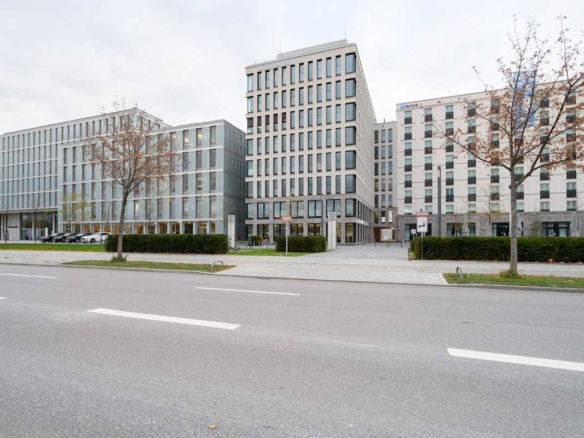
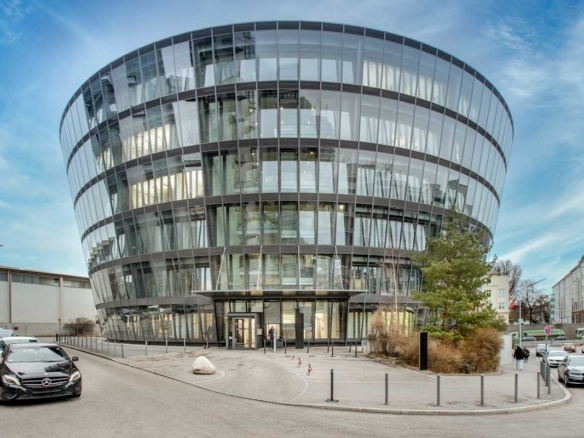
Munich serves as Germany’s third-largest economy with Europe’s highest concentration of biotechnology and innovation alongside automotive and technology sectors. Office space spans established city centre districts and modern regenerated precincts supporting both multinational corporations and research-driven enterprises.
Featured

Office spaces in Munich

A selection of the best workspaces in Munich

No listing found.

No listing found.

Featured

Office spaces in Munich

A selection of the best workspaces in Munich

Trusted by leading companies

Looking for workspace in Munich?

Our advisory team searches the full market on your behalf. Cost-free service for flexible workspace searches. Shortlist within 24 hours.

market overview

Europe's innovation hub for biotech, automotive, and technology

Munich’s economy extends across technology, automotive, life sciences, and finance, with the metropolitan region responsible for over 21 percent of German biotechnology companies and a quarter of national clinical studies. Major employers including BMW, Siemens, and Allianz anchor substantial employment, whilst a dense network of software and ICT firms positions Munich as Europe’s foremost innovation location beyond London and Paris.

Office space concentrates across several established districts serving distinct occupier bases. The city centre and Maxvorstadt attract professional services and creative industries in period and converted buildings. Schwabing and Arabellapark serve technology and corporate occupiers with modern mixed-use stock. Parkstadt Schwabing has emerged as a modern office quarter following large-scale regeneration, supporting technology firms and corporate functions alongside residential and retail components.

The serviced office market reflects international competitive standards, with international brands like Regus and Spaces operating alongside local providers such as Design Offices offering tailored fit-outs and flexible occupancy. Demand centres on flexibility and quality finishes supporting scale-ups, multinational subsidiaries, and consulting operations.

A highly skilled workforce trained through technical universities and corporate training programmes supports occupiers across advanced manufacturing, automotive engineering, biotechnology, and software development.

Transport infrastructure includes Munich Airport, comprehensive U-Bahn and S-Bahn rail networks, and regional connectivity across Bavaria and Europe. The city attracts technology scale-ups and research institutions capitalising on innovation clustering effects and access to specialised technical talent.

Key Industries

What type of companies are based in Munich?

Technology

Manufacturing

Automotive

Insurance

Professional Services

Aerospace

Workspace types

Workspace types in Munich

Serviced offices

Fully fitted, all-inclusive, move-in ready. Furniture, IT, reception, and cleaning in a single monthly fee. Terms from one month.

Coworking spaces

Flexible shared workspace offering hot desks, dedicated desks and private pods on rolling terms. High-speed internet, breakout areas and bookable meeting rooms included. A cost-effective option for freelancers, remote workers and small teams.

Your questions answered

Common questions

The Altstadt around Maximilianstrasse and Lehel holds boutique legal, private banking and family office tenants in heritage stock. The Arnulfpark and Hauptbahnhof corridor hosts larger grade A blocks used by Siemens, Allianz and Linde’s advisory teams. Schwabing-West and the area around Leopoldstrasse suit technology, media and creative firms. Werksviertel-Mitte near the Ostbahnhof has emerged as a creative and tech campus including Werk1 incubator. Parkstadt Schwabing on the north edge hosts Microsoft, IBM and other tech majors. The Bavaria Towers in Bogenhausen and Neue Balan office park near the airport serve corporate and shared services tenants.
Munich is Germany’s most prosperous major city and a European centre for insurance, automotive, aerospace, advanced engineering and increasingly technology, with Allianz, BMW, Siemens, MAN and Airbus Defence anchoring the corporate base. The occupier mix blends Bavarian Mittelstand firms, major international corporates and a growing VC-backed tech scene anchored by UnternehmerTUM at TU Munich. Flex supply includes WeWork, Spaces, Regus, Satellite Office, Mindspace and Design Offices. Demand is among the strongest in Germany and concentrated on premium, well-specified private suites, with rents at a meaningful premium to Frankfurt, Berlin and Hamburg.
Munich has Germany’s lowest central office vacancy rate and one of the most supply-constrained major markets in Europe, due to the strict Stadtratsbeschluss planning framework that limits new builds in central districts. Flex operators often have to lease from scarce sublease inventory and cannot easily grow when demand spikes, which pushes prices up and shortens negotiation windows. Enterprise tenants typically shortlist buildings quickly and sign faster than in Berlin or Frankfurt. The city’s outer rings around Parkstadt Schwabing, Werksviertel and Neue Balan offer more supply, and large occupiers frequently trade central location for predictable availability and lower rents there.
Munich offers a deep flexible workspace market dominated by serviced offices, with supply concentrated across the Altstadt-Lehel city centre, the Maxvorstadt, Schwabing and the Werksviertel and Arnulfpark business corridors. Operators range from global brands to long-established German platforms, supporting automotive, aerospace, professional services and a deep technology occupier base. Coworking is well represented, particularly across the Werksviertel and Schwabing, supporting tech scale-ups, design agencies and creative firms. Managed offices, where space is fitted bespoke for a single tenant on a flex contract, are not yet a meaningful part of the Munich market.
Flexible workspace demand in Munich is anchored by automotive and aerospace, with BMW Group’s global headquarters, Allianz, MAN Truck & Bus, Siemens and a vast supplier ecosystem driving substantial occupancy. Insurance is unusually deep, anchored by Allianz, Munich Re, ERGO and HUK-Coburg. Aerospace, anchored by Airbus Helicopters, MTU Aero Engines and Rohde & Schwarz, drives further demand. Technology and AI are growing rapidly, supported by the Technical University of Munich’s TUM Venture Labs, Celonis and a strong venture-backed startup community. Professional services, law firms, life sciences (Wacker Chemie, Sandoz) and a substantial trade fair services community round out demand.