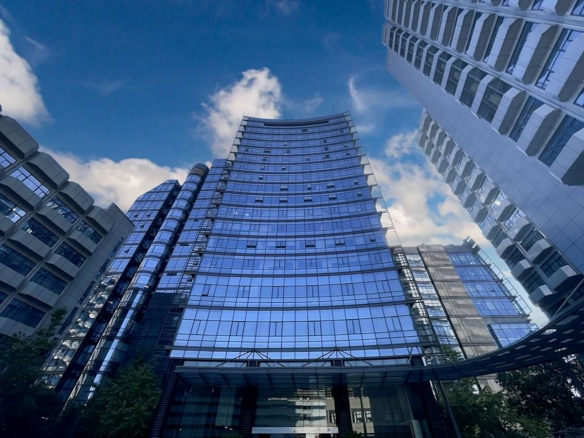
Office space in Hangzhou

Hangzhou’s office market is concentrated in Binjiang District and Future Sci-Tech City, with new Grade A towers designed for digital economy and fintech operations. The market reflects the city’s position as China’s e-commerce and technology capital.
Featured

Office spaces in Hangzhou

A selection of the best workspaces in Hangzhou

No listing found.

No listing found.

Featured

Office spaces in Hangzhou

A selection of the best workspaces in Hangzhou

Trusted by leading companies

Looking for workspace in Hangzhou?

Our advisory team searches the full market on your behalf. Cost-free service for flexible workspace searches. Shortlist within 24 hours.

market overview

China's digital economy pivot

Hangzhou ranks as one of China’s most economically dynamic cities, anchored by e-commerce, artificial intelligence, and fintech sectors centred on Alibaba Group and a dense network of digital platform companies. The city has diversified beyond its technology foundation into advanced manufacturing, pharmaceuticals, and professional services, supported by substantial government research investment and innovation zone developments.

The Binjiang District attracts technology companies with modern office campuses and innovation hubs designed specifically for digital and fintech operations. Future Sci-Tech City functions as a purpose-built technology cluster offering purpose-designed accommodation and incubator support. Qianjiang New Town serves as the administrative and financial centre, with premium office stock near government facilities. West Lake areas draw professional services and creative businesses, offering strong connectivity and proximity to hospitality infrastructure.

Compared to Shanghai, Hangzhou offers considerably lower occupancy costs whilst maintaining comparable access to talent and venture capital. The city benefits from government support for specific technology sectors, particularly e-commerce and cloud infrastructure. Direct high-speed rail links to Shanghai and Nanjing, combined with Hangzhou’s established position in the Yangtze River economic region, position the market as an accessible alternative for multinational technology firms establishing China operations.

Key Industries

What type of companies are based in Hangzhou?

E-commerce

Technology

Manufacturing

Tourism and Hospitality

Financial Services

Logistics and Supply Chain

Your questions answered

Common questions

Qianjiang New City in Jianggan district is the main CBD, home to banking, asset management and large enterprise tenants in towers around Civic Centre and Raffles City. Xixi Wetlands in Xihu district is the technology heartland, anchored by Alibaba’s Xixi Campus and the Dream Town startup cluster. Future Sci-Tech City in Yuhang draws scaling technology and AI firms, including many Alibaba spinouts. Binjiang on the south bank of the Qiantang River hosts Hikvision, Dahua and a deep hardware and security technology base. West Lake and Wulin Square suit professional services and traditional corporate tenants.
Hangzhou is China’s leading private-sector technology city, anchored by Alibaba, Ant Group, NetEase and a broad ecommerce, fintech and AI ecosystem, alongside strong manufacturing and textile industries in the surrounding Zhejiang region. The occupier base is dominated by domestic Chinese technology firms and their suppliers, with fewer multinationals than Shanghai. Flex supply is concentrated in technology-oriented campuses, with domestic operators such as Distrii, MYDreamPlus and UCOMMUNE active. Dream Town and the Future Sci-Tech City give the city one of the densest startup incubator footprints in the country.
Alibaba’s Xixi Campus and its expanding Global Headquarters in Yuhang act as a gravity well for suppliers, partners and smaller technology firms selling into the Alibaba, Ant Group and Cainiao ecosystems. Many startups prioritise flex space within a short drive or metro ride of Xixi, which has concentrated demand in Yuhang and the western part of Xihu district. Venture-backed founders often choose Dream Town in Cangqian for its subsidies and incubator support. Operators serving this cluster tend to offer lighter-touch coworking rather than enterprise managed offices, which still skew towards Qianjiang New City.
Hangzhou offers a deep flexible workspace market dominated by serviced offices, with supply concentrated across the Qianjiang New Town CBD, the Wulin Square commercial centre, the Future Sci-Tech City in Yuhang and the Binjiang High-Tech Zone. Operators range from global brands to local Chinese platforms, supporting technology, e-commerce, banking and multinational regional teams. Coworking is more limited but growing, with operators across the Future Sci-Tech City and Binjiang, suiting tech scale-ups, AI firms and creative studios. Managed offices, where space is fitted bespoke for a single tenant on a flex contract, are not yet a meaningful part of the Hangzhou market.
Flexible workspace demand in Hangzhou is overwhelmingly anchored by technology and e-commerce, with Alibaba’s global headquarters at Xixi, Ant Group, NetEase and a vast supplier ecosystem driving the bulk of activity across Yuhang and Binjiang. The Future Sci-Tech City has emerged as one of China’s leading AI and quantum computing clusters. Banking and financial services occupiers cluster across the Qianjiang New Town CBD, including Alibaba-affiliated fintech operations. Manufacturing supplier networks tied to the Yangtze Delta, biotech, professional services, gaming and a substantial cultural and creative industries base round out demand.