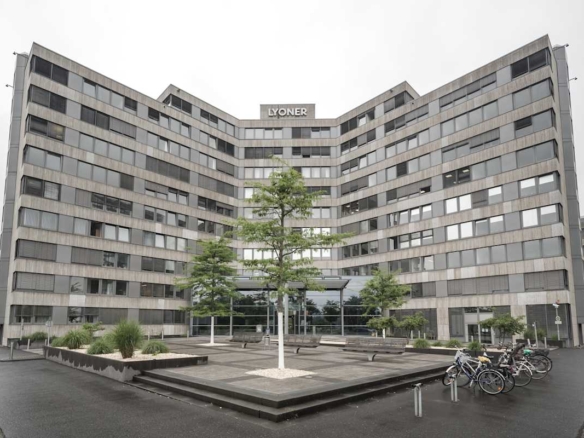
Office space in Frankfurt

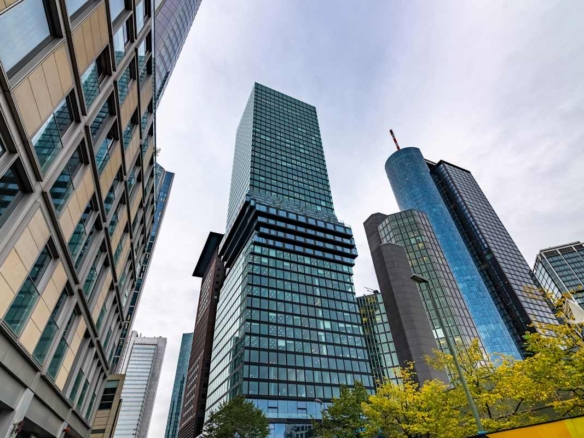
Frankfurt establishes Germany’s most mature office market, anchored by the Bankenviertel financial district and Westend’s modern tower stock. The market supports continental Europe’s strongest financial services concentration alongside growing technology and life sciences sectors.
Featured

Office spaces in Frankfurt

A selection of the best workspaces in Frankfurt

No listing found.

Featured

Office spaces in Frankfurt

A selection of the best workspaces in Frankfurt

Trusted by leading companies

Looking for workspace in Frankfurt?

Our advisory team searches the full market on your behalf. Cost-free service for flexible workspace searches. Shortlist within 24 hours.

market overview

Europe's financial services anchor

Frankfurt operates as Germany’s financial capital and one of Europe’s leading business centres. The city anchors a diverse economy built on finance, logistics, technology, and life sciences. Home to the European Central Bank, Deutsche Bundesbank, and over 200 international banks, Frankfurt maintains position as continental Europe’s largest financial centre. Finance employs more than 120,000 people across the metropolitan region, creating sustained demand for office space across multiple quality grades.

The office market concentrates in established districts. The Bankenviertel, or banking district, houses most major banks and law firms occupying high-specification towers reflecting premium positioning. Westend has emerged as a modern alternative with newer Grade A stock and mixed-use development attracting multinational firms and consultancies. Europaviertel, near the main railway station, provides emerging space suited to growing companies and corporate project teams. Frankfurt Airport, one of Europe’s busiest, supports companies requiring international connectivity; the railway hub serves as Germany’s largest transport interchange.

Compared to London, Frankfurt offers lower rents and stronger regulatory focus on financial services; versus Zurich, it provides greater economic diversity and labour availability. The city’s established bank concentration and regulatory infrastructure attract financial services headquarters and continental operations for global firms. International connectivity, combined with skilled multilingual workforce drawn from strong universities and professional services sectors, positions Frankfurt as the natural European base for companies establishing continental financial operations.

Key Industries

What type of companies are based in Frankfurt?

Financial Services

Professional Services

Logistics and Supply Chain

Technology

Real Estate

Media

Workspace types

Workspace types in Frankfurt

Serviced offices

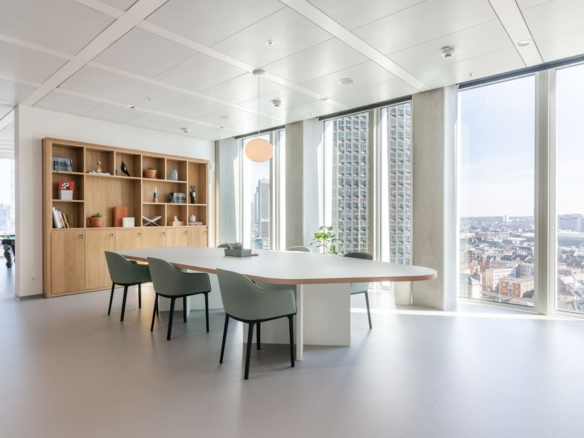
Fully fitted, all-inclusive, move-in ready. Furniture, IT, reception, and cleaning in a single monthly fee. Terms from one month.

Coworking spaces

Flexible shared workspace offering hot desks, dedicated desks and private pods on rolling terms. High-speed internet, breakout areas and bookable meeting rooms included. A cost-effective option for freelancers, remote workers and small teams.

Your questions answered

Common questions

The Bankenviertel around Taunusanlage and Opernturm is the dominant cluster for banking, legal and consulting tenants, with premium grade A towers and polished serviced offices. Westend and Bockenheim hold townhouse and mid-rise stock popular with asset managers and boutique law firms. Bahnhofsviertel has gentrified into a hub for fintech and creative agencies at lower rents than the core. Europaviertel and Gallus offer newer, ESG-graded towers such as Taunusturm and One Forty West, used by scaling tech and professional services teams. Ostend near the ECB suits regulators, supervisory bodies and their advisers.
Frankfurt is Germany’s financial capital and home to the European Central Bank, Deutsche Bundesbank and the largest concentration of banks in continental Europe. The occupier base skews heavily to banking, asset management, legal, insurance and consulting, with a growing fintech, regtech and data centre layer following post-Brexit relocations from London. Flex demand is enterprise-led, with large floors, private suites and managed solutions in high demand over open coworking. The city is compact, with strong rail and airport links, and the Messe Frankfurt trade fair cycle drives recurring short-stay demand.
Banks, asset managers and insurers in Frankfurt operate under BaFin and ECB oversight, so space needs to meet controls around data segregation, visitor management, confidential meeting rooms and secure document handling. Many regulated tenants avoid fully open coworking floors and take private, lockable suites with dedicated cabling, access control and metered occupancy data. Operators in the Bankenviertel and Westend typically offer these managed options. Firms handling trading or client data often require uninterruptible power and redundant connectivity, which tends to narrow the shortlist to newer stock such as Taunusturm, Marienturm and Omniturm.
Frankfurt’s flexible workspace market is dominated by serviced offices, with supply concentrated across the Bankenviertel financial district, Westend, the Europaviertel around the Messe and the Mainzer Landstrasse and Taunusanlage corridors. Operators range from global brands to long-established German platforms, supporting banking, asset management, law firms and multinational regional teams. Coworking is well represented, particularly across the Bankenviertel and Westend, supporting tech scale-ups, fintech and creative agencies. Managed offices, where space is fitted bespoke for a single tenant on a flex contract, are not yet a meaningful part of the Frankfurt market.
Flexible workspace demand in Frankfurt is overwhelmingly anchored by financial services, with the European Central Bank, the Bundesbank, Deutsche Bank, Commerzbank, DZ Bank and a deep cluster of global investment banks driving the bulk of activity across the Bankenviertel. Asset management is unusually deep, anchored by DWS, Union Investment, Allianz Global Investors and a wide range of hedge funds and private equity firms. Professional services and law firms supporting capital markets concentrate across Westend and the central business districts. Logistics tied to Frankfurt Airport, telecoms (Deutsche Telekom is nearby in Bonn), trade and a growing fintech community round out demand.