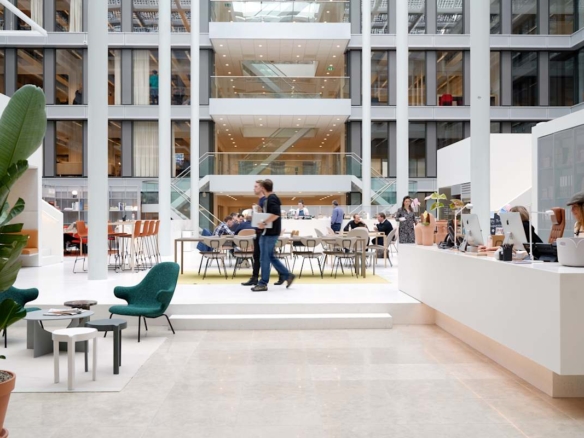
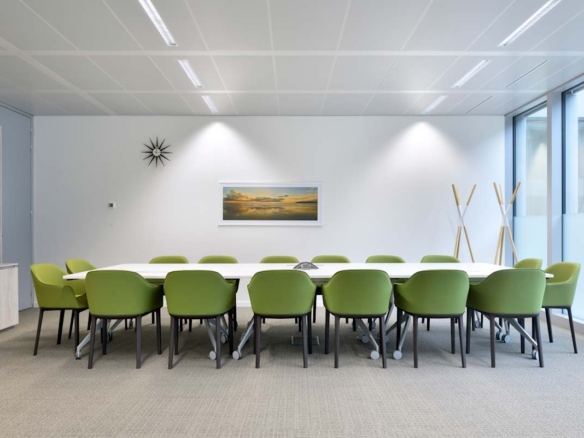
Office space in Sao Paulo

São Paulo generates over 10% of Brazil’s GDP as Latin America’s largest city. Avenida Paulista, Faria Lima, and Itaim Bibi host the primary financial and technology sectors across high-rise towers and modern developments.
Featured

Office spaces in Sao Paulo

A selection of the best workspaces in Sao Paulo

No listing found.

No listing found.

Featured

Office spaces in Sao Paulo

A selection of the best workspaces in Sao Paulo

Trusted by leading companies

Looking for workspace in Sao Paulo?

Our advisory team searches the full market on your behalf. Cost-free service for flexible workspace searches. Shortlist within 24 hours.

market overview

Brazil's economic engine

São Paulo is Brazil’s largest city and the economic engine of Latin America, home to the headquarters of major Brazilian and multinational corporations across finance, technology, manufacturing, and professional services. The São Paulo Stock Exchange concentrates here, making the city the region’s primary destination for capital markets access and sophisticated financial infrastructure. The office market spans several established business districts, each with distinct tenant profiles and positioning.

Avenida Paulista remains the financial and corporate centre, offering high-rise towers and strong metro system connectivity. Faria Lima and Itaim Bibi form the investment banking corridor, attracting law firms and technology operations with modern Grade A stock and proximity to shopping, dining, and entertainment facilities. Vila Olímpia and Pinheiros have emerged as technology quartiles, drawing startups and scaling companies seeking lower rents and concentration of digital talent. Transport connectivity via the metro network supports continuous expansion across residential and commercial areas.

Key Industries

What type of companies are based in Sao Paulo?

Financial Services

Manufacturing

Media

Professional Services

Automotive

Healthcare

Your questions answered

Common questions

Faria Lima and the Itaim Bibi cluster hold the premium financial stock, with JK Iguatemi, Complexo JK and Faria Lima Plaza housing Itau, XP, major private equity firms and multinational banks. Avenida Paulista remains the traditional CBD, with the Conjunto Nacional, Citibank Tower and Paulista Corporate attracting banking, telecoms and media tenants. Vila Olimpia and Berrini host shared services and GCC operations for banks and consumer goods firms. Pinheiros and Vila Madalena attract scaling tech, VC-backed startups and creative agencies. Barra Funda holds media and broadcast tenants. Alphaville in the western suburbs serves large corporate campuses. Brooklin houses consumer goods and pharma.
Sao Paulo is the largest city in the Southern Hemisphere and the commercial capital of Brazil, with one of the largest office markets in Latin America. The economy spans banking led by Itau, Bradesco and Santander, consumer goods, industrial holdings, agribusiness, and a deep fintech and scaleup ecosystem anchored by Nubank, iFood and C6 Bank. Flex supply is the largest in Latin America, with WeWork, Regus, Spaces, Cubo, Regus and domestic operators Beegin and Contempo active across Faria Lima, Paulista and Vila Olimpia. Demand skews to premium private suites in Faria Lima, with more price-sensitive tenants choosing Paulista or Vila Olimpia.
Sao Paulo traffic is among the worst in the world, with chronic congestion on the Marginal Pinheiros, Marginal Tiete and 23 de Maio. The Linha 4 Amarela and expanded Linha 5 Lilas metro lines have eased commutes between the Zona Sul residential areas and the Faria Lima cluster, and occupiers increasingly prioritise buildings within walking distance of stations such as Faria Lima, Paulista and Brooklin. Many multinationals run extensive private shuttle networks, and secure parking with motorbike capacity is a baseline expectation. Senior staff often prefer offices within five kilometres of their homes in Jardins, Itaim or Moema to keep commute times manageable.
Sao Paulo offers Latin America’s deepest flexible workspace market, dominated by serviced offices, with supply concentrated across the Faria Lima financial district, Avenida Paulista, the Berrini and Itaim Bibi business corridors, and the Vila Olimpia and Pinheiros areas. Operators range from global brands to long-established Brazilian platforms, supporting banking, multinational regional HQs, professional services and a vast technology occupier base. Coworking is well represented, particularly across Vila Madalena, Pinheiros and Faria Lima, supporting founders, scale-ups and creative agencies. Managed offices, where space is fitted bespoke for a single tenant on a flex contract, are not yet a meaningful part of the Sao Paulo market.
Flexible workspace demand in Sao Paulo is anchored by financial services, given Sao Paulo’s role as Latin America’s leading financial centre. Itau Unibanco, Bradesco, Banco Santander Brasil, B3 (the Brazilian stock exchange) and a deep cluster of investment banks, asset managers and private equity firms concentrate across Faria Lima. Multinational regional HQs covering Latin America maintain large operations. Manufacturing, retail, food and beverage and consumer goods conglomerates drive substantial supplier networks. Technology, fintech and e-commerce are growing rapidly, supported by Nubank, iFood, Gympass and a strong venture-backed startup community. Professional services, law firms, energy and media round out demand.