Office space in Shanghai

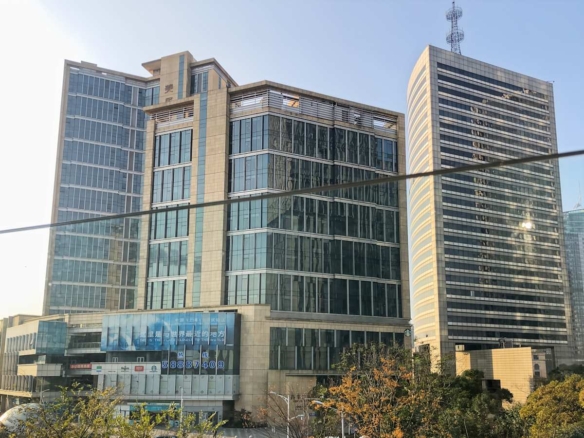
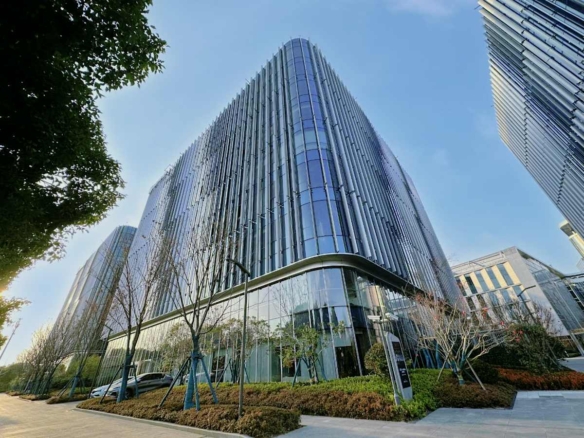
Shanghai is China’s largest flexible workspace market, with centres spanning Lujiazui, the Bund, Jing’an, and the Hongqiao transport corridor. The city serves as the default entry point for international companies operating in mainland China, offering a depth of operator choice and workspace formats that other Chinese cities cannot yet match.
Featured

Office spaces in Shanghai

A selection of the best workspaces in Shanghai

No listing found.

No listing found.

Featured

Office spaces in Shanghai

A selection of the best workspaces in Shanghai

Trusted by leading companies

Looking for workspace in Shanghai?

Our advisory team searches the full market on your behalf. Cost-free service for flexible workspace searches. Shortlist within 24 hours.

market overview

China's commercial capital and international gateway

Shanghai is China’s largest city by GDP and its primary centre for international commerce, finance, and trade. The city is home to the Shanghai Stock Exchange, one of the world’s largest by market capitalisation, and the headquarters of major Chinese and multinational corporations across banking, manufacturing, technology, and consumer goods. SAIC Motor, Bank of Communications, China Eastern Airlines, and the Shanghai operations of firms like HSBC, JPMorgan, and Siemens anchor a commercial base that spans virtually every sector.

Lujiazui in the Pudong New Area is Shanghai’s most prestigious financial address, housing the headquarters and China offices of the city’s largest banks and asset managers. The Bund and adjacent Huangpu district attract professional services, luxury brands, and creative industries. Jing’an and the former French Concession serve technology firms, design agencies, and mid-market professional services occupiers seeking character buildings at moderate rents. Hongqiao, anchored by its combined rail and airport terminal, has emerged as a major commercial district for companies that require connectivity to other Chinese cities, particularly those in the Yangtze River Delta.

Shanghai’s transport infrastructure is extensive. Pudong International Airport provides direct flights to major business destinations worldwide, while Hongqiao connects the city to the domestic rail network, including high-speed services to Beijing in under five hours, Hangzhou in under an hour, and Nanjing in just over an hour. The Shanghai Metro is one of the world’s largest urban rail networks, with over 800 kilometres of track serving every major business district.

Fudan University, Shanghai Jiao Tong University, and Tongji University are among China’s most respected research institutions, producing graduates in engineering, finance, and management. For international companies evaluating Shanghai against Beijing, Shenzhen, or Hong Kong as their China base, the case rests on Shanghai’s commercial openness, the depth of its international business community, its regulatory familiarity for foreign-invested enterprises, and the breadth of its flexible workspace market, which accommodates everything from single desks to full floors across both premium towers and converted heritage buildings.

Key Industries

What type of companies are based in Shanghai?

Financial Services

Manufacturing

Logistics and Supply Chain

Real Estate

Technology

Professional Services

Your questions answered

Common questions

Lujiazui in Pudong is the primary financial core, suiting banks, insurers, funds and larger corporate occupiers around the Oriental Pearl and IFC towers. Jing’an, covering Nanjing West Road, anchors corporate HQs, luxury, law firms and consulting. Xuhui, around Xujiahui and the former French Concession fringe, draws media, consumer and lifestyle brands. Huangpu and the Bund serve traditional finance and government-facing firms. On Pudong’s eastern side, Zhangjiang hosts pharma, life sciences, semiconductor and tech occupiers within the high-tech park, and Qiantan has emerged as a newer mixed business district.
Shanghai is mainland China’s deepest flex market, with extensive supply across Lujiazui, Jing’an, Xuhui and Huangpu, and a mix of international and strong domestic operators. Occupier demand skews toward multinational regional headquarters, Chinese corporates, financial services, consumer, pharma and tech firms, with Zhangjiang anchoring a large life sciences and semiconductor cluster. Flex supply leans heavily toward private offices and managed solutions rather than open coworking, reflecting local business culture, and Mandarin-language community, strong IT infrastructure and enterprise-grade security are standard across Grade A buildings.
Setting up long-term in Shanghai typically requires a registered Chinese entity, such as a WFOE or representative office, with a physical registered address that must be a qualifying commercial lease. Some serviced operators provide registration-ready addresses, which can significantly shorten entity setup time. Free trade zone options, including Lujiazui, Jinqiao and Waigaoqiao within the Shanghai Pilot Free Trade Zone, offer different customs, finance and foreign exchange regimes that suit specific trading or financial business activities. Work permits and residence permits are tied to the employing entity, so matching licensing and workspace early matters.
Shanghai offers one of Asia’s largest flexible workspace markets, dominated by serviced offices but with strong coworking depth. Serviced supply is concentrated in Pudong’s Lujiazui financial district, Puxi’s traditional CBD around People’s Square and Nanjing Road, and the Hongqiao business hub serving Yangtze Delta connectivity. Operators range from global brands to local platforms, supporting banking, multinational regional HQs, manufacturing groups and law firms. Coworking is well represented across Xintiandi, the West Bund and emerging creative-led districts, suiting tech, media and lifestyle occupiers. Managed offices, where space is fitted bespoke for a single tenant on a flex contract, are not yet a meaningful part of the Shanghai market.
Flexible workspace demand in Shanghai reflects a uniquely diverse mainland Chinese business base. Banking, asset management and insurance anchor the Lujiazui financial district, with global and Chinese institutions operating substantial flex footprints. Multinational regional HQs are concentrated across Pudong’s CBD and the Hongqiao business hub. Manufacturing, automotive and consumer goods firms maintain large supplier networks. Technology, e-commerce and life sciences are the fastest-growing demand drivers, particularly across Zhangjiang Hi-Tech Park, the West Bund AI cluster and Caohejing. Fashion, retail and creative industries cluster across Xintiandi, the French Concession and Jing’an. Trading, logistics and shipping firms remain important.