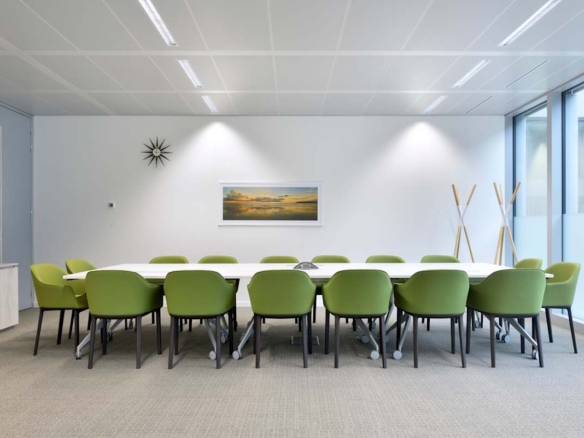
Office space in Cape Town

Cape Town represents a mature market serving finance, technology, and creative industries with a competitive cost base relative to European centres. The CBD and waterfront precincts offer Grade A space, whilst Century City provides suburban nodes for technology and media occupiers.
Featured

Office spaces in Cape Town

A selection of the best workspaces in Cape Town

No listing found.

No listing found.

Featured

Office spaces in Cape Town

A selection of the best workspaces in Cape Town

Trusted by leading companies

Looking for workspace in Cape Town?

Our advisory team searches the full market on your behalf. Cost-free service for flexible workspace searches. Shortlist within 24 hours.

market overview

African financial and creative centre

Cape Town functions as South Africa’s legislative capital and a major economic centre, supporting a diverse business base spanning multinational corporations, financial services firms, and fast-growing technology startups. The city’s economy benefits from strong international links, a skilled workforce, and substantially lower operating costs compared to London or other global financial hubs. The cost advantage extends to real estate, making Cape Town attractive for companies seeking geographic diversification or lower-cost expansion.

Office space concentrates across several established districts with functional specialisms. The CBD and Foreshore offer traditional Grade A stock and proximity to government institutions. The V&A Waterfront provides premium office space within a mixed-use development appealing to corporate occupiers and professional services. Century City, north of the centre, hosts multiple operators targeting technology companies and media businesses seeking modern facilities at lower capital and occupancy costs than core CBD locations. Tyger Valley serves suburban demand with business park environments.

As a regional hub, Cape Town competes with Johannesburg for financial services work and with emerging technology centres for startup investment. However, its lower cost base, quality lifestyle amenities, and digital infrastructure support attraction of remote teams and companies establishing African operations. Transport connectivity to London via direct flights supports international business travel, whilst regional rail and road networks connect to broader South African markets.

Key Industries

What type of companies are based in Cape Town?

Tourism and Hospitality

Financial Services

Technology

Media

Real Estate

Logistics and Supply Chain

Your questions answered

Common questions

The CBD, anchored around Long Street, Bree Street and the Foreshore, suits financial services, law firms, professional services and corporate occupiers in Grade A stock. The V&A Waterfront hosts premium corporate HQs, consulting and multinationals in a high-amenity setting. Green Point and De Waterkant draw tech, media and creative firms. Century City, a self-contained mixed-use development north-east of the CBD, anchors larger corporate and BPO operations. Woodstock and Salt River have emerged as a creative and tech cluster in converted industrial stock.
Cape Town is South Africa’s secondary commercial centre and its primary base for tourism, creative industries and a rapidly growing tech and BPO sector serving UK and European clients. The flex market is deep across the CBD, V&A Waterfront and Century City, with a significant Woodstock creative cluster. Occupiers include financial services firms, Naspers-adjacent tech operations, BPO providers and a large base of international remote workers drawn by the digital nomad appeal. Supply includes major international operators and strong local chains, with English the default business language.
International teams use Cape Town coworking spaces widely, particularly in the CBD, V&A Waterfront and Woodstock, and South Africa’s remote work visa has formalised a long-standing digital nomad scene. Short-term day passes, monthly memberships and nomad-friendly arrangements are standard in the major operators. Time-zone proximity to Europe and the UK makes the city particularly practical for European and British remote workers and teams running Europe-facing operations. English is universal in business, and connectivity is generally strong, though occupiers should factor in load-shedding resilience and backup power provision.
Cape Town’s flexible workspace market is dominated by serviced offices, with supply concentrated across the City Bowl CBD around Adderley Street, the V&A Waterfront, Century City and Claremont. Operators range from global brands to long-established South African platforms, supporting professional services, financial services, technology and a substantial remote-working and digital nomad community. Coworking is more limited but established, with boutique operators concentrated in Woodstock, Salt River and the inner CBD, suiting founders, creative agencies and digital nomads. Managed offices, where space is fitted bespoke for a single tenant on a flex contract, are not yet a meaningful part of the Cape Town market.
Flexible workspace demand in Cape Town is anchored by financial services, with Allan Gray, Coronation, Old Mutual, Sanlam and a deep asset management cluster concentrated across the City Bowl and Claremont. Technology and fintech are growing rapidly, with Naspers, Prosus and a strong venture-backed startup community across Woodstock and the wider creative belt. Tourism, hospitality and conferencing services anchor the V&A Waterfront. The film, advertising and creative production industries are unusually strong, supported by Cape Town’s role as a global filming destination. Insurance, BPO operations, agribusiness and a substantial digital nomad community round out demand.