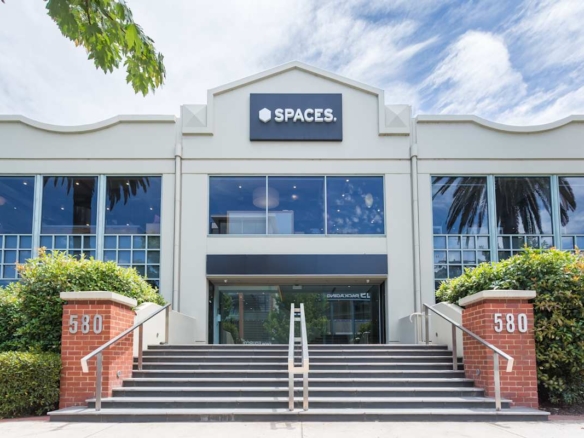
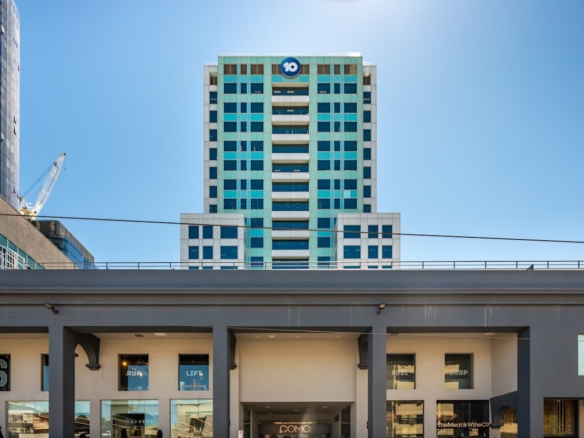
Office space in Melbourne

Melbourne anchors Australia’s second-largest economy with one of the Asia-Pacific region’s largest and most diverse office markets, spanning the CBD’s premium financial districts and modern precincts across Docklands and Southbank. The market offers over 4.5 million square metres of space across traditional grade A towers and refurbished heritage buildings.
Featured

Office spaces in Melbourne

A selection of the best workspaces in Melbourne

No listing found.

No listing found.

Featured

Office spaces in Melbourne

A selection of the best workspaces in Melbourne

Trusted by leading companies

Looking for workspace in Melbourne?

Our advisory team searches the full market on your behalf. Cost-free service for flexible workspace searches. Shortlist within 24 hours.

market overview

Australia's financial and tech centre with diverse district options

Melbourne’s office market reflects an economic base exceeding USD230 billion annually, driven by financial services, professional services, technology, and life sciences. Major corporates including BHP, ANZ, NAB, and Rio Tinto operate headquarter functions in the city, while regional headquarters for Alibaba, Cisco, Salesforce, and Siemens support Asia-Pacific operations.

Collins Street remains the traditional financial district, concentrated with law firms and investment banks, while Docklands has transformed into a technology and media precinct with modern purpose-built towers. Southbank and South Yarra attract creative industries and emerging tech companies to contemporary office environments and adaptive heritage spaces.

The CBD and Docklands form the commercial core with approximately 4.5 million square metres of diverse stock ranging from premium towers to character conversions. Melbourne’s workforce exceeds 1.8 million across the metropolitan area, with particular strength in finance, law, technology, and life sciences talent.

Transport infrastructure includes comprehensive tram, train, and bus networks serving major districts, plus international flights from Tullamarine Airport. The city’s office markets remain more cost-competitive than Sydney, supporting both multinational corporations and scaling local technology companies.

Key Industries

What type of companies are based in Melbourne?

Financial Services

Education

Manufacturing

Professional Services

Tourism and Hospitality

Healthcare

Your questions answered

Common questions

The Melbourne CBD grid, particularly Collins Street, Bourke Street and Rialto around Collins Place, is the prime cluster for banking, legal and consulting, with ANZ, NAB and BHP among the largest occupiers. Docklands hosts NAB’s campus, AFL House and ESG-led new-build stock used by corporate tenants. Southbank and Freshwater Place suit asset management and consulting firms. Cremorne and Richmond have emerged as Australia’s largest startup and scale-up cluster, home to Seek, REA Group, MYOB and Culture Amp. Collingwood and Fitzroy attract creative agencies. St Kilda Road holds government, not-for-profit and legacy corporate tenants.
Melbourne is Australia’s second-largest city and a dominant centre for banking, superannuation, professional services and a rapidly growing technology sector centred on Cremorne and Richmond. The CBD holds one of the world’s largest grade A office markets by floorplate size, and the Docklands extension added another generation of stock. Flex supply is large and mature, with Hub Australia, WeWork, Regus, JustCo, Victory Offices and The Commons all active. Demand post-pandemic has weighted toward Cremorne and Richmond at the expense of parts of the CBD, although sustained return-to-office trends and major tenant relocations have stabilised CBD absorption.
Victoria’s grid has faced reliability challenges during summer peaks, and the state’s decarbonisation policy has pushed occupiers and landlords toward NABERS Energy-rated stock. Tier one corporates routinely require 5.5 or 6 Star NABERS ratings, which concentrates demand in newer Docklands towers such as Melbourne Quarter, 80 Collins and 447 Collins Street. Older stock in the Western CBD grid and parts of St Kilda Road struggles to meet these thresholds without major capex and is sometimes repositioned or retrofitted. Flex operators in top-rated buildings often use the rating as a key differentiator for ESG-focused enterprise tenants.
Melbourne offers a deep flexible workspace market dominated by serviced offices, with supply concentrated across the CBD core along Collins Street, Bourke Street and Spring Street, the Docklands, Southbank and the Cremorne and Richmond tech corridors. Operators range from global brands to long-established Australian platforms, supporting banking, professional services, technology and a growing scale-up community. Coworking is well represented, particularly across Cremorne, Richmond and Fitzroy, supporting founders, creative agencies and tech scale-ups. Managed offices, where space is fitted bespoke for a single tenant on a flex contract, are not yet a meaningful part of the Melbourne market.
Flexible workspace demand in Melbourne is anchored by financial services, with NAB and ANZ headquartered in the city alongside global investment banks, insurers and a deep asset management community concentrated across the CBD core and the Docklands. Technology, fintech and SaaS occupiers cluster across Cremorne, Richmond and the wider Yarra tech belt, with Carsales, REA Group, MYOB and a strong venture-backed startup community. Professional services, law firms and consulting concentrate across the CBD. Education, healthcare, biomedical research linked to the Parkville precinct, advanced manufacturing and a substantial creative and media industries community round out demand.